Running OpenClaw on freshdedicated Mac mini M4hosts is usuallyheadless: SSH in, script the toolchain, register a resident gateway, and prove health before anyone pairs a client. This guide compresses the 2026 playbook into one path:Node runtime first, then pickeitherofficialinstall.shornpm i -g(not both fighting onPATH), runopenclaw onboard --install-daemon, capture afirst-round acceptancelog bundle, and keepopenclaw doctoras your single triage screen before you expand from one region to six metros in parallel.

1. Node runtime before anything else
OpenClaw expects asupported Node.js line(pin to what your release notes recommend—many teams standardize onNode 22in 2026). On a brand-new macOS image, confirmnode -v,npm -v, and that your shell profile loads the same interpreter non-interactively (ssh host 'node -v'must match an interactive login). If you rely onnvmorfnm, install the manager with an explicit default alias and export it forlogin and non-loginsessions—daemon installs fail silently when launchd sees a differentPATH. Treat Xcode CLT only if your automation pulls native deps; otherwise keep the footprint minimal for faster grey-scale.
2. install.sh versus npm: pick one spine
The officialinstall.shpath is ideal when you want the upstream layout and fewer surprises on managed hosts.npm install -g openclaw(name per package) wins when you already standardize on a global npm prefix owned by your service user. The failure mode isdouble installs: twoopenclawbinaries onPATH, mismatched versions, and Doctor reporting healthy binaries while the daemon points elsewhere. Choose one channel per host, document the decision in your runbook, and gate upgrades through the same channel. For token drops, channel routing, and WebSocket hygiene after install, seeLearn more: zero-install baseline, npm vs install.sh, gateway 1008 and channels.
3. openclaw onboard --install-daemon
Use onboarding to bind workspace defaults, permissions, and thelaunchddaemon in one shot. In headless mode, pass whatever non-interactive flags your version documents (service user, config path, listen address). After the daemon lands, verifylaunchctl listshows the label loaded, confirm the gateway port matches your firewall allow-list, and capture stdout/stderr from the first boot. Pairing can wait until Doctor is clean—don’t invite clients while TLS, loopback, or auth stubs are still red.
4. First-round acceptance (business sign-off)
Treat acceptance as asingle checklist fileyou attach to the change ticket:(a)openclaw doctorgreen on binaries, config path, network reachability;(b)minimal model route smoke using the profiles you will run in production;(c)disk watermark snapshot (df -h, derived-data or caches if applicable);(d)evidence of restart survival (sudo launchctl kickstartor reboot);(e)logs scrubbed for secrets. That bundle is what lets infra approve grey-scale beyond lab. When disk contention threatens parallel compile bursts, plan tier bumps usingLearn more: cloud Mac disk headroom and parallel compile forecasting across six metros.
5. openclaw doctor: one-page triage
Run Doctor after every install or upgrade and paste the summary into your ticket. Read top failures first:binary mismatch(wrongPATH),config not found(cwd vs home),port bind(already in use),TLS/proxy(enterprise MITM),token clock skew. Fix in that order—most “channels silent” bugs are still local hygiene. Once routing works, deepen auth and model failover withLearn more: models, multi-provider openclaw.json, and gateway auth.
6. Six-region parallel gateway grey-scale FAQ
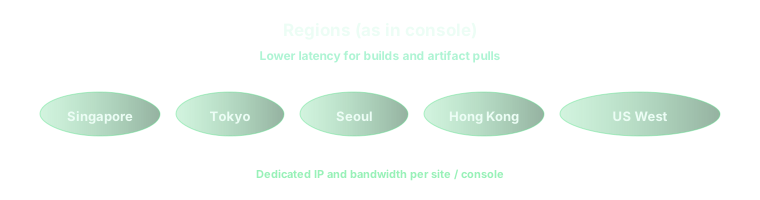
RollSingapore, Tokyo, Seoul, Hong Kong, US East, and US Westasparallel cohorts, not serial guesses: provision identical tiers (for example Mac mini M4 16GB/256 or 24GB/512 per policy), apply the same install spine, then aim asmall percentage of sessionsto each new gateway while Doctor and latency dashboards agree.
- Q: One broken metro?Drain its traffic in the router, keep Doctor artifacts, reinstall with the same spine rather than improvising npm on only that host.
- Q: Different peak hours?Stagger cron-style health probes but keep install versions identical; drift is harder to debug than load.
- Q: Need safer tool fan-out? tighten
sessions_spawnand depth limits consistently—seeLearn more: tool whitelist and sub-agent parallelism guardrails.
All of this is easier on dedicated cloud Mac mini
The workflows above assumepredictable metal: no surprise neighbors, stable disks, and SSH plus optional VNC when you need to debug visually. vpszap deliversphysical M4 Mac miniinstances—not virtualized slices—withabout five-minute activation,SSH and VNC together, andbilling by the day, week, month, or quarter without long-term contracts. Six-region footprints become a capacity planning exercise, not a fight with oversubscribed VMs.
If you want the lowest-friction place to rehearse headless OpenClaw gateways before production traffic,vpszap cloud Mac miniis the closest match to owning racks without owning racks.
